
Imagine that you want to build one of the best soccer leagues in the world. You have a league already, but it’s terrible. You barely have any good players, no one cares about the games, and certainly no one watches them. That’s not good! It’s not all bad, however. Your country sits on a monstrous supply of hydrocarbons and the government (after some suboptimal decisions involving the Washington Post) decides it wants to invest in the league’s success. What would be your first step?
If your answer was “sign the most popular player in the world,” congratulations! You’re now qualified to strategize for Saudi Arabia’s Saudi Pro League (SPL). Cristiano Ronaldo may have become persona non grata at Manchester United, but he was still scoring goals when he signed to capital club Al-Nassr. Crucially, he had tremendous name recognition and the most Instagram followers of any athlete on the planet. In December 2022, Al-Nassr made him the highest-paid athlete on the planet, earning €200 million this year. The SPL didn’t stop there. Neymar, Karim Benzema, and Sadio Mane were just some of the world’s elite that would follow Cristiano. According to Deloitte, $907 million of net spending (amount spent minus amount recouped from sales) was spent on new recruits in the summer of 2023 alone. That figure was higher than any global league except the richest league in the world, England’s Premier League. The difference was, the SPL was more or less starting from scratch.
Thus, the Saudi Pro League set out to replace France’s Ligue 1 as the fifth-best soccer league in the world. In January, Cristiano announced that he thought the SPL was already there: “To be honest I think the Saudi league is not worse than the French league … I think right now we are better.” Slanderous? Surely. The gist was nevertheless clear: the SPL is coming for everyone.
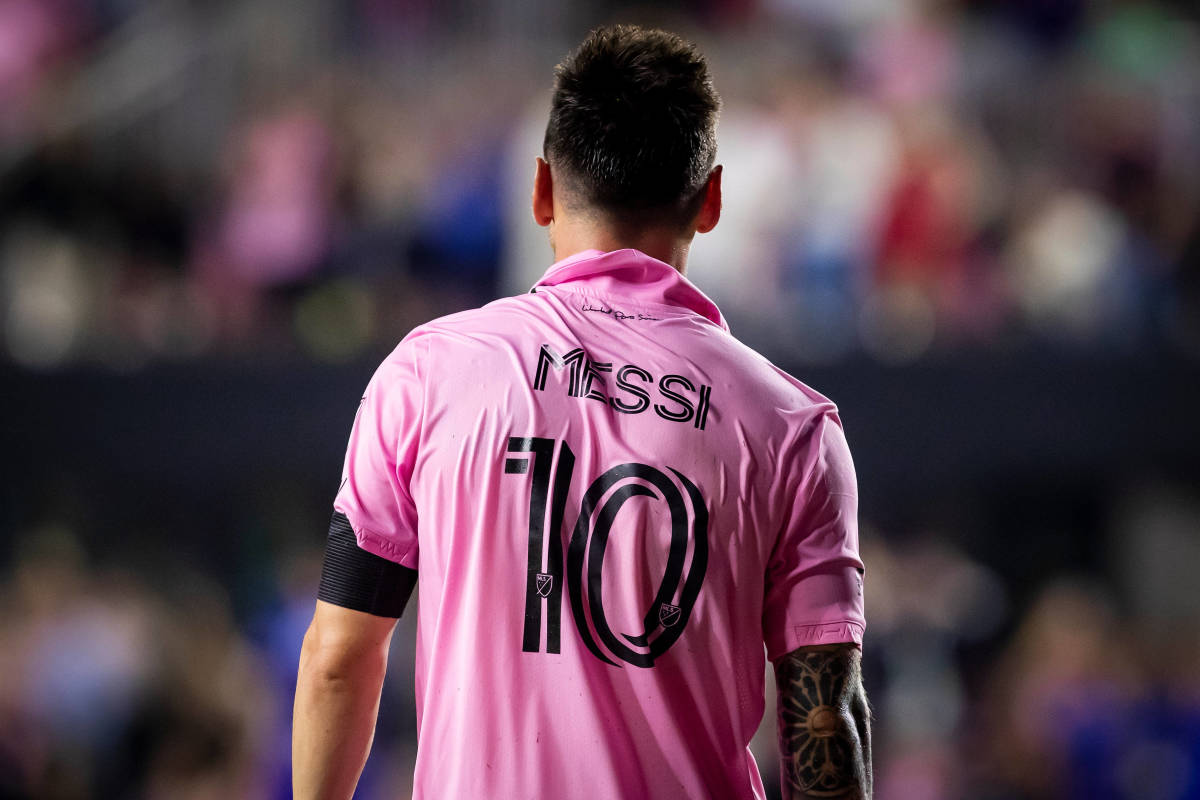
Two continents away, a sleeping giant stirred. The United States’ Major League Soccer (MLS) is only America’s fifth-most watched sports league, sure, but it has slowly lay developing in the land of plenty. After all, forty-one of the world’s fifty most valuable sports franchises resides stateside. The MLS also has grander ambition than its current status. MLS commissioner Don Garber has been adamant for decades that the league’s goal is to catch and surpass the Big 5 (England’s Premier League, Spain’s La Liga, Germany’s Bundesliga, Italy’s Serie A, and France’s Ligue 1 has been more or less the accepted order). When this sleeping giant saw another upstart sign Cristiano, it could not help but pounce on Lionel Messi. Messi was simply Ronaldo’s greatest rival and has been the best player in the world for the past two decades. Where Cristiano was washed at the top European level, Messi was still a contender for the Ballon D’Or, soccer’s greatest individual honor, this year. It was every bit the statement signing that Cristiano had been.
As the soccer leagues most outspoken about their ambition, the SPL and MLS warily eye each other, stalking, each desperate to gain the respect their European brethren enjoy. The MLS, too, targets Ligue 1 – a stepping stone, like MacArthur’s island hopping strategy, until the MLS can challenge Italy, Germany and Spain. England looms as a final boss. As Garber tells it, “[n]othing but time will stop that.” So which league is more likely to become a global staple – to surpass Ligue 1? Is it even possible for the SPL or the MLS to become the fifth–best league in the world?
…
Why did Cristiano choose Ligue 1 to pick on? After all, it would be appropriate to hear that the MLS and SPL aspire to be top leagues in the world and want to give each a reassuring pat on the head. The top four leagues in the world currently have bulwarks that make them unrealistic targets. The gap between each league and the Premier League, for example, is one that will take decades to bridge. That’s exemplified by the gap in television rights revenue ($2.55bn annually for the Premier League; $250MM annually for the MLS). Instead, the realistic goal for an aspirational, upwardly mobile league is to become the world’s fifth-best league. Ligue 1’s problems are many. Chief among them are debt and a lack of competition. To be short, Ligue 1 features one team that’s among the best in the world (Paris St.-Germain, funded by Qatari oil money) and a host of teams squabbling for places behind. The resource gap between PSG and the others is massive. The team at Swiss Ramble shows that in 2023, PSG generated more revenue than the fourteen bottom clubs combined – or, more than their five closest rivals combined. For comparison, PSG bring in a full 34% of Ligue 1’s revenue. The champions of La Liga (22%), Bundesliga (21), Serie A (17%), and the Premier League (11%) lag far, far behind. French football has been generally uncompetitive, leading to the second issue: debt and television rights.
There’s a reason the Harlem Globetrotters don’t have as many fans as NBA teams despite being dominant. People know who’s going to win. France had the lowest total revenue of the Big 5 in 2022-23 at €2.38bn. Italy was next at €2.85bn. Uncoincidentally, France generated less than half of the next lowest league’s broadcasting income (€706M vs. the Bundesliga’s €1.52bn). In short, France found the market was relatively uninterested in its product during the last TV right bidding. What really highlights Ligue 1 as a target is the collapse of its old TV rights deal. Mediapro and BeIN sports had agreed to pay €1.1bn annually to televise French games. When COVID-19 ran havoc on Mediapro’s business, it simply walked away from the agreement. The current French television deal, between BeIN and DAZN, pays only €500MM a year. That figure is nowhere close to other Big 5 leagues. What’s this mean? It means that if Ligue 1 is an animal, it’s a gazelle with a bad leg, struggling and frothing to stay with the pack in front of it. To break the European hegemony of the Big 5, replacing Ligue 1 would be the most attainable achievement for any soccer league on a different continent.
The MLS and the SPL have designs on becoming a Big 5 global soccer league. That means replacing France. A pertinent question is, where is each league right now? Even in a world where statistical analysis goes further and holds more weight than ever before, there’s no way to make an apples-to-apples comparison. Opta, which uses a chess-like Elo rankings system, last released global league power rankings in March. The Premier League held out as a clear #1; Major League Soccer stood as the tenth-best league in the world. Although the SPL had the highest-ranked non-European team (Al-Hilal, 44th globally), the league itself ranked only 26th. In January, the sports intelligence group Twenty-First Group ranked the SPL as the 59th-best league in the world with MLS 29th; TransferRoom, a collective resource used by hundreds of clubs worldwide, has the MLS and the SPL back-to-back in 16th and 17th. Perhaps Cristiano was a tad overzealous in suggesting the SPL was neck-and-neck with Ligue 1.
The ultimate positions of the MLS and SPL change from rankings system to rankings system. What remains constant is a lead for the MLS. This isn’t massively surprising given that the SPL showed its cards just last summer, but if the SPL significantly lags the MLS after spending $907 million and a further $350 million in the summer of 2024, what possible advantages does it have to win a race to international acceptance?
…
The case for the SPL ascending to Big 5 status is quite simple. A cynical writer might use one word. Here’s five: lots and lots of money.
In Soccernomics, Simon Kuper and Stefan Szyminski established a strong correlation between a team’s success in football and its wage bill. Americanized: its payroll. Basic logic holds as well. A team pays better players more money. The more money you pay your players, the more likely you are to have a strong team. SPL teams (and the kingdom itself, which controls four of the biggest teams) spent over one billion euros on salaries last year. Three SPL players made more than the erstwhile best player on the planet, Kylian Mbappe. Incredibly, Ousmane Dembele is the second-highest paid player in France and would be just the twelfth-highest paid player in the SPL. Altogether, the Saudi Pro League surpassed Ligue 1’s wage bill in just oneyear.[1]
The Saudi path to ascend the global scene and beat the MLS to the title of fifth-best in the world is straightforward: spend ever more money, convincing not only players to join but convincing existing players to stay. Building a pro-SPL case starts and ends with cold, hard cash. There’s not much else, and that’s okay.
For all of his prognostications, Ronaldo was spot-on with one thing: players did feel comfortable following in his footsteps and playing with him in Saudi Arabia. The barriers to that decision are plentiful: lifestyle differences, lack of high-end training facilities, and a lower quality of play that endangers an athlete’s ability to be selected for their national team. The first two can shorten a player’s stay after he arrives. Quality of play threatened to put a real chill on players showing up in the first place. For example, Sebastian Giovinco was coming off the back of the best season in MLS history when Italy’s coach announced the MLS wasn’t competitive enough for Giovinco to be considered. Luckily for the kingdom, a Pele-on-the-Simpsons-sized sack of money has proven enough to put those fears to back of mind.
While the MLS has been able to sign very good talent in the last five years, that recruitment absolutely pales in comparison to the haul the SPL brought in. It’s worth reminding everyone that $907 million of players were recruited all in one summer. The fun did not stop there. Ivan Toney (€42M), Marcos Leonardo (€40M), and Moussa Diaby (€60M) led another $350 million wave of expats this summer. Toney and Diaby were good Premier League starters. It is probable that the summer of 2023 will stand as the high-water mark of expenditure – that the SPL didn’t plan on outspending Ligue 1 every year while having 24% of its total attendance. But the ambition of summer 2023 will not be a one-off, even if tampered. I’d be remiss if I neglected this summer’s attempt to sign Vinicius, 2024’s Ballon D’Or favorite, to a galaxy-leading €350M annual salary.
Where the MLS traditionally has resorted to signing past-their-prime superstars the SPL bought a variety of player types. Many young players were brought in to accompany Cristiano (39 years old), Neymar (32), and Benzema (36). Diaby is 25, smack in the middle of his prime. Leonardo (21) and Toney (28) are close to it. This is crucial for continued improvement of the SPL. Not only do you want players who are improving to make the league better, but overreliance on the old folk means your players will decline, or worse, retire – gone forever. The €80 million spent on Neymar can be down the drain. As it is, the $1.2 billion spent by the SPL over the last two summers just slightly outpaced the €94 millionthat the MLS coughed up.
How do you make a better league? You sign better players. From that standpoint, the SPL is miles beyond the MLS. It’s probably beyond any other league but the Big 5 in top-end talent. It may even be ahead of France in that regard. Any continuation of its recent talent explosion spells the SPL shooting up global league rankings. In fact, at its current trajectory, it’s arguable the SPL is on track to be the world’s sixth- or fifth-best league by the end of the decade.
If the path to becoming one of the best leagues in the world is putting great players on the field (spoiler alert: it is), then the Saudi Pro League did more than any other league last year to improve. It possesses a financial lever of which the MLS and France could only dream (Ligue 1 had a net spend of only €257 million in the same period). It is purely due to financial carrots that the Saudi league may grow and prosper, but who cares? The SPL has a demonstrated ability to pull superstars. At its current rate, it’s only a matter of time before it passes the MLS, Turkey, and the Netherlands to nestle in amongst the world’s elite. Quality correlates to salary. Saudi can outspend nearly anyone. Money solves all problems.
…
Well, this is awkward. Remember when I said money solved all problems? Chinks in the Saudi armor have already appeared. The four problems that will slow the Saudi growth to a standstill are lifestyle/facility issues, recruitment profile, a potentially drying budget, and the Saudi national talent pool.
It has been demonstrated money can get a player to Saudi Arabia. The bad news for the kingdom is money has a harder time keeping him there. Take Jordan Henderson. He was Liverpool’s captain and a key England international. Henderson’s transfer was one of the highest-profile resettlings to the Middle East. At Al-Ettifaq, he was paid £700k a week, likely quadruple his English salary. After 17 games and less than six months with the SPL, he took a £500k a week pay cut to go play in the Dutch league. Why? Henderson quoted substandard training facilities, weather, and an unhappy family. Aymeric Laporte, a multiple-time Premier League champion at Manchester City and a Euros winner just this summer, joined Cristiano at Al-Nassr. In January, he said, “[the SPL] hasn’t made it easy on us. In fact, there are many players who are dissatisfied… You spend three hours a day in the car.” Karim Benzema, arguably the league’s second-biggest attraction after Christiano, was also said to be thinking of greener pastures. That money is the SPL’s only carrot to attract talent is not in-of-itself a bad thing. Money takes a diminishing role, though, when the soccer infrastructure, culture, and the literal temperature of a country are perceived to be so radically different or wanting compared to Europe. It’s not effective to sign a big player and have him leave a year or less later for no money, and the current SPL lifestyle has made several players threaten as much.
At times, Saudi Arabia has been able to operate like a Premier League team would when it comes to signing players. Let me explain. The Premier League, with its monstrous TV deal, is the richest league in the world. Most, if really not all, of the other leagues can be classified as selling leagues. That means teams’ survival depends on developing players and selling them on to richer clubs. In England, even the worst five teams can buy players from the best Dutch, Belgian, and Danish teams. Such is the power of riches, begotten by TV deals or oil. In some deals SPL teams have signed, they’ve acted like a Premier League team and bought good, young talent from poorer clubs.
Another other type of signing has captured the bulk of SPL resources. It involves buying players from top clubs. Predator on predator violence. Why would a top club sell its player? The reasons are twofold: that player is replaceable or over the hill; or that player needs to be sold for financial accounting reasons. It is your lucky day, as we will not be getting into football accounting, but we can say the majority of teams that sold stars to the SPL were only too happy to do so. Neymar, Ziyech, Mane and Benzema were all 30-year-olds whose clubs were happy to get something of value for them. This is not a sustainable model: you must keep buying old superstars, because the ones you have get very old. To fix this leak and generate long-term league growth, the SPL must shift recruitment priority to a younger type of star – one that does not regard his SPL stay as a retirement tour.
Recall that the SPL had a net spend of $907 million in the summer of 2023, higher than anyone but the Premier League. This is, to use a technical term, outrageous for the 26th best league in the world. A league that attracts an average of under 10,000 spectators a night, with no substantial TV deal to speak of, spent more than any other league in the world outside of England. Of course the SPL explosion isn’t happening in a vacuum. The kingdom has spent mountains on sportswashing with golf ($2bn for LIV) and boxing already. The reason the kingdom and its de facto leader, Mohammed bin Salman, wants to spend more on football is for it to know and for football-crazed writers to wonder about. What is interesting, however, is its ability or desire to continue spending.
It’s been established that a continued firehose of cash is essential to any SPL dreams of becoming a Big 5 league. The problem for the kingdom, without diving too far in, is that it’s already cutting some of its most extravagant spending. Saudi Arabia’s sovereign wealth fund reported last September that cash levels had fallen to $15bn – the lowest ever reported. Tim Callen, at the Arab Gulf States Institute think tank in Washington, estimated the government may need to contribute $270bn to accommodate all national projects underway. There have been reductions to the scope of the proposed $500bn city-state Neom as the price of various projects continued to swell. Why are we discussing infrastructure projects in a football article? It’s been written that the SPL has a very, very narrow path to being a major football league. That path requires a tremendous amount of funding. Money already spent means little – to be better than France, the league requires an ongoing amount of cash to pay wages and even more scratch to continue acquiring players. If major infrastructure projects are being cut down to size, it stands to reason a football league – pedantic in usage compared to housing and industry – will have its spigot run dry next. The Saudi Pro League cannot sit on its laurels. Yet furious spending yielded no substantial television deals and very poor attendance numbers – only one club, Al-Ahli, beat the MLS. Without sporting or lifestyle incentives, the SPL needs a blank checkbook for its players. Without fans watching on TV or in person, the SPL is wholly dependent on bin Salman’s continued interest in soccer.
A cautionary tale lies to the east. Stop me if you’ve heard this one before: around 2012, an upstart, economically formidable country started signing older, popular stars in a bid to increase its standing. Superstars like Dider Drogba and Carlos Tevez and young talent like Oscar and Paulinho signed for big-money transfer fees and wages to grow the game. That league had a multiyear sugar high before the government stepped in to reduce the amount clubs were spending. The Chinese Super League, has since dropped back into oblivion since money dried up.
There is no argument against the Saudi Pro League greater than that of a lack of funding. Yet even assuming the checks keep coming and lifestyle issues can be overcome, the SPL faces a massive barrier to competing as currently constructed. Currently, each Saudi team may register 10 non-Saudi players out of a 30-man first-team roster. This is very important. It means the 20 remaining slots on each team must be filled by Saudi nationals. Here’s the massive problem: Saudi Arabians are currently, uhhh, not very good at football.
This is where the case for a Saudi football revolution dies on the vine. Pretty much every league (except the best, the Premier League) features a majority of its players from the country in which the league is located. Saudi football is at a massive disadvantage if and when the majority of its players are, in fact, Saudi. Saudi Arabia is currently FIFA’s 56th ranked team in the world. The country currently has eight players worth €1M or more, according to Transfrmarket. Its top player, Firas Al-Buraikan, is worth €6M. The United States has nineteen players worth that much and 25 worth €1M. The Big 5 each have a hundred of players worth €1M. Due to nationality caps the ceiling of the Saudi Pro League project is determined by the quality of actual Saudi Arabian soccer players. There’s ample evidence that they are not good enough to make the SPL a top-five soccer league in the world.
…
You know how during every World Cup, your too-online friend tweets that America should have the best soccer team because we have the best athletes? He won’t want to hear the next paragraph. The United States’ talent pool is on a remarkable and unprecedented upswing. More Americans are playing top European soccer than ever before. They’re also worth more than ever before. For an idea of improved quality, compare the 2010 and 2022 U.S. World Cup teams. Only five Americans on the World Cup roster played 1,500 minutes (equivalent of about 17 starts of a 36-45 game season) for Big 5 clubs in 2010-2011. None of the 2010 squad played for a “big” club – a club competing for trophies or with a large checkbook. This number would almost double just twelve years later. The 2022 roster featured nine players with 1,500 minutes for Big 5 clubs; that doesn’t count Christian Pulisic, who was alternatively injured and frozen out at Chelsea. More encouraging were the types of teams the current players suit up for. Pulisic and Yunus Musah moved to AC Milan, runners-up in Serie A last year. Tim Weah joined Weston McKennie at Juventus, the most dominant Italian team of the 21st century; and so on. The question is begged: is this a golden generation, a rare confluence of American talent at the same time? Or is there a sweeping tide lifting the talent pool of American footballers? The answer is revealed in the most positive indicator for the MLS becoming a top-five league: American academies.
To the uninitiated, there is no amateur draft in football. Players – kids – sign at a young age and practice in a club’s academy until they play or are sold. MLS academies are producing more and better young American talent than ever before. That’s not my professional opinion. It’s the opinion of Manchester City, Chelsea, and others who are raiding American clubs. Cavan Sullivan became the youngest player to ever play in the MLS at 14 years and 233 days, beating Freddy Adu by 13 days. He’s already been sold to Manchester City for $5 million (but not to join until he is 18 – score one for AP Lit). This year, Chelsea bought the 19-year-old Caleb Wiley from Atlanta United. They had poached “Gaga” Slonina from Chicago two years prior. The assembly line goes on and on: Jack Mize, the Aaronsen brothers, Zach Steffen, Alphonso Davies. It used to be a big deal when a club like Chelsea signed an American like Matt Miazga in 2016. It’s quietly become the norm. Why does it matter that America’s untapped potential is being tapped? European interest in American youngsters is indicative of improving American talent. Where the SPL’s ascension is capped due to the quality of domestic talent, the MLS can look forward to a higher floor in the coming years.
The MLS’ recruitment over the last few years, sans Messi, does not inspire one to clutch at his or her pearls. It looks especially pale vis-à-vis the SPL. There are, however, inspiring notes regarding player age and cost. The MLS has a traditional reputation as a retirement home. From Beckham to Lampard to Pirlo, stars would come stateside at the tail end of their prime, generally 33 and onwards. It was a point where they clearly could not continue at the highest (Champions League) level. Starting with Giovinco, the MLS started to target talent in the middle of their prime. It was a testament to the league’s advancing financial ability, as anything. At 31, Lorenzo Insigne signed to become the MLS’ second-highest paid player at $15 million (he’s since been replaced by Messi). Insigne was Napoli’s captain at the time and scored 11 goals to lead the club to third in Serie A. Xherdan Shaqiri, of Bayern Munich and Liverpool fame, made the jump to the Chicago Fire at 30. Even better: Riqui Puig joined from Barcelona at 22 years old. He’s become an integral part of this year’s resurgent LA Galaxy side. These signings represent a slight shift from the glamorous 35-year-old who can’t run to the solid 30-year-old who still produces. It’s not as glamorous as the Saudi approach, but more affordable and sustainable. It’s also not unfair to expect a “Messi bump” of talent just as Ronaldo ushered in a new wave of players in the SPL.
Domestic player pools are what separate the MLS from the SPL. What sets the MLS on a collision course with Ligue 1 are television rights (one more time!) and franchise values. Broadcast deals are stagnating for soccer leagues globally. France, as previously referenced, has felt this most acutely – but even the Premier League’s new deal this year represented a nominal and real downturn. In 2022, the MLS signed a “watershed” 10-year, $250 million rights deal with Apple. That was even before Messi arrived. Factor in the old numbers ($90 million combined from an ESPN/Fox tandem) and the MLS represents one of, if not the only, league with inspiring television growth.
That growth, and economic health, is part of the reason why MLS franchises are already some of the world’s most valuable. It is absolutely incredible to say this: Forbes valued nine MLS teams among the thirty most valuable in the world (France has one: PSG at $4.4bn). Nine out of thirty. Of course, given the MLS is somewhere between the 10th and 25th best league in the world, that represents extreme outperformance. If the teams aren’t great, how the hell can they be worth so much? Great question! Glad you’re here. The MLS doesn’t have a relegation system. That means the lowest-placing teams in the league don’t get demoted to a lesser league – and crucially, to a share of a lesser television rights deal. Add a new TV deal to the lack of relegation and you have stable, predictable cash flows. That’s a valuation dream. The combination of being in America and no relegation threat attracts a bevy of American capital, meaning the MLS has richer owners than many of its European brethren. Investment in academies and player recruitment beckons.
…
France is in trouble. Buying an MLS franchise has been, and projects to continue being, a very solid investment. There’s substantial overlap with ownership in other American sports: David Tepper (Charlotte FC/Charlotte Panthers), Arthur Blank (Atlanta United/Atlanta Falcons), and the Hunt family (FC Dallas, Sporting KC/Kansas City Chiefs) are just some of the dual citizens. MLS’ growth isn’t a soccer-wide phenomenon, however: Ligue 1 clubs have been bought and sold for pennies on the dollar in the last decade. The storied club Bordeaux filed for bankruptcy, getting demoted to the third division; Jim Ratcliffe bought Nice for €100 million in 2019; and Todd Boehly & co. bought Strasbourg for €70 million in 2023. These lower values reflect a league gasping for economic health, rocked by an implosion of its broadcasting deal. The MLS, and the United States, can’t expect to match French academies in producing talent any time soon. What it may be able to offer, sooner than most expect, are higher salaries.
Higher salaries? That sounds familiar. No, we have not forgotten about the Saudi Pro League project. It’s exciting, it’s loud – it’s everything but a serious contender to replace France as the fifth-best league in the world. Uncertainty is one word to describe the kingdom’s willingness to keep plowing cash into the league in the face of other national projects. Near certainty is how I’d describe my expectation that Mohammed bin Salman turns off the firehose and the SPL returns to obscurity in five years, like the Chinese Super League. This summer’s diluted spending reeks as such. The SPL’s greatest legacy will be bailing European clubs out of financial messes by buying unwanted players at inflated prices. Just like China. If you can get past the funding problem, the quality of Saudi internationals (or lack thereof) means any run towards Ligue 1 is bound to be tilting at windmills.
Though Ronaldo may want you to believe there’s a rivalry brewing between the MLS and the SPL, there isn’t. The SPL is the third-place baseball team who signs a bunch of free agents and makes prognostications – then finishes in third all over again. The MLS has organic television and franchise value growth, flourishing academies, and some recruitment of its own. After all, it says something that Messi (the superior player) signed in the U.S. for a quarter of Ronaldo’s salary. Athletes have always wanted to play here. They’re now doing so while they still have tread on the tires. Saudi Arabia has sustainability questions, no real revenue, and most damning of all, no one cares about the games. In the race to supplant France and Ligue 1, the SPL brought a wheelbarrow of cash to a gun fight. Take your paces.
[1] The research referenced above was intended for intraleague comparison, not interleague, but my goodness.
 First Take Forever